|
Size: 2765
Comment:
|
Size: 2771
Comment:
|
| Deletions are marked like this. | Additions are marked like this. |
| Line 22: | Line 22: |
| * [wiki:Self:FsTutorial/FslFeatFreeSurfer Session 2] - Applying FreeSurfer tools to FSL fMRI Analysis (FEAT) | * [wiki:Self:FsTutorial/FslFeatFreeSurfer Session 2] - Applying !FreeSurfer tools to FSL fMRI Analysis (FEAT) |
| Line 34: | Line 34: |
| *[wiki:Self:FsTutorial/Data Getting the tutorial Data] *[wiki:Self:FsTutorial/Exercises Exercise Overview] *[wiki:Self:FsTutorial/Tools FreeSurfer Tools] |
*[wiki:Self:FsTutorial/Data Getting the tutorial data] *[wiki:Self:FsTutorial/Exercises Listing of all exercises] *[wiki:Self:FsTutorial/Tools FreeSurfer tools] |
| Line 39: | Line 39: |
| ## *[wiki:Self:FsTutorial/SnapShot PDF and HTML snapshot] | *[wiki:Self:FsTutorial/SnapShot PDF and HTML snapshot] |
[wiki:FreeSurferWiki top]
FreeSurfer Tutorial
Overview
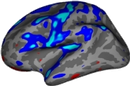
The FreeSurfer tools deal with two main types of data: volumetric data (volumes of voxels) and surface data (polygons that tile a surface). This tutorial should familiarize you with FreeSurfer's volume and surface processing streams, the recommended workflow to execute these, and many of their component tools. The tutorial also describes some of FreeSurfer's tools for registering volumetric datasets, performing group analysis on morphology data, and integrating FSL Feat output with FreeSurfer (overlaying color coded parametric maps onto the cortical surface and visualizing plotted results). After completing the tutorial, you should be able to:
- perform surface reconstructions;
- generate subcortical segmentations;
- fix errors encountered during the volume or surface processing;
- overlay functional data onto surfaces;
- perform group analysis of structural (e.g. thickness) and functional data.
Course Outline
- Day 1
[wiki:FsTutorial/OutputData Session 1] - Use the volume and surface viewing tools to observe correctly processed output data.
[wiki:FsTutorial/TroubleshootingData Session 2] - See examples of problematic output data, and learn how to fix the problems.
[wiki:FsTutorial/MorphAndRecon Extra] - Long-form tutorial covering Freesurfer's morphometry and reconstruction tool recon-all.
[wiki:ReconAllDevTable Extra] - recon-all process-flow reference table.
- Day 2
[wiki:FsTutorial/GroupAnalysis Session 1] - Learn how to conduct a group analysis, including visualization and inspection of results.
[wiki:FsTutorial/FslFeatFreeSurfer Session 2] - Applying FreeSurfer tools to FSL fMRI Analysis (FEAT)
Additional
[wiki:FsTutorial/Data Getting the tutorial data]
[wiki:FsTutorial/Exercises Listing of all exercises]
[wiki:FsTutorial/Tools FreeSurfer tools]
[wiki:FsTutorial/Glossary Glossary]
[wiki:FsTutorial/Acknowledgements Acknowledgements]
[wiki:FsTutorial/SnapShot PDF and HTML snapshot]